Cities
Best Italian cities for Indian students: a 2026 ranking by liveability
Ranked by what an Indian student actually cares about — cost, vibe, Indian community, weather, English-friendliness, and university quality. Eight cities compared.
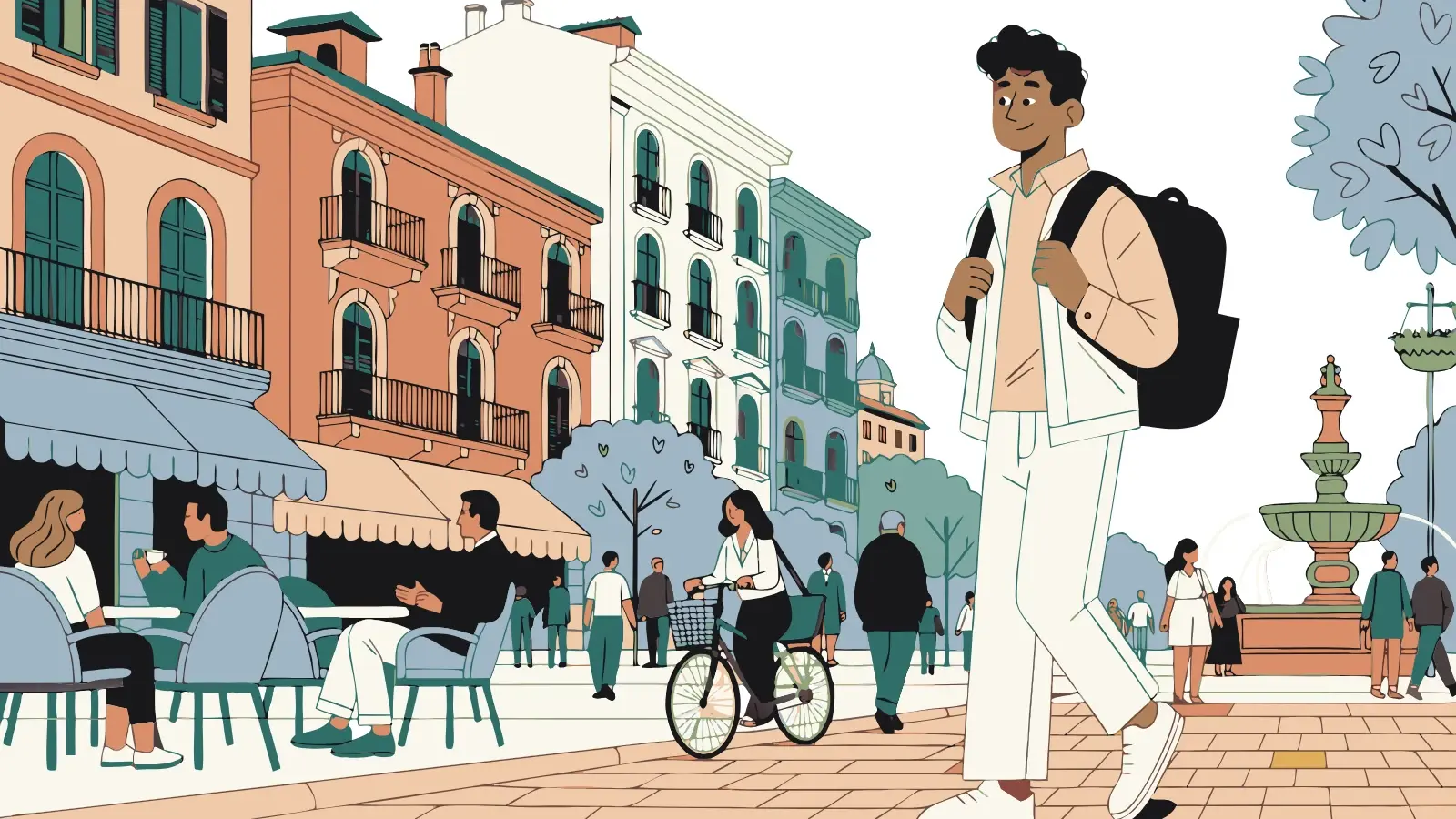
Most Indian students choose an Italian university first and a city second. That order makes sense for admission, but it underweights a decision that quietly shapes the next two-to-six years: where you actually live. Italy is regional in a way India recognises — Milan and Naples are as different from each other as Mumbai and Chennai. This guide ranks eight Italian student cities by the factors Indian families actually weigh when planning a move: cost, weather, Indian community presence, English-friendliness, university quality, and the small everyday textures that decide whether a city feels like home.
The eight cities — at a glance
| City | Region | Rent (shared, EUR) | Vibe | Indian community | Climate |
|---|---|---|---|---|---|
| Bologna | Emilia-Romagna | €350 – 550 | Student-saturated, walkable | Medium-large | Hot summers, cold humid winters |
| Milan | Lombardy | €500 – 750 | Cosmopolitan, fast, expensive | Largest in Italy | Hot summers, foggy winters |
| Rome | Lazio | €400 – 650 | Big-city scale, historic | Large | Mediterranean, mild winters |
| Padua | Veneto | €300 – 500 | Small, friendly, near Venice | Small but growing | Cold winters, humid summers |
| Turin | Piedmont | €300 – 500 | Calm, alpine, elegant | Small | Cold winters, fresh summers |
| Trento | Trentino | €280 – 450 | Mountain calm, structured | Very small | Alpine — cold winters, mild summers |
| Pisa | Tuscany | €280 – 450 | Compact, science-driven | Small | Mediterranean, mild |
| Naples | Campania | €250 – 400 | Warm, intense, southern | Small | Warm Mediterranean year-round |
Rent ranges are for a shared-flat spot near city centre. Single rooms and studios add 25-60% to these figures. The 'Indian community' label is a rough size relative to other Italian cities, not an absolute count.
Bologna — the practical pick for masters
Bologna is the answer most cost-aware Indian masters students arrive at once they've seen the numbers. A shared room near the centre runs €350-550, single rooms €500-700. The University of Bologna is the oldest in the Western world, with one of Italy's largest English-taught masters portfolios. The city itself is compact and walkable — most students don't need a daily transport pass, which removes €25-45 per month from the budget Milan and Rome cannot avoid.
Bologna's student population is roughly 85,000 in a city of 400,000 — one of the highest student-to-resident ratios in Europe. The infrastructure (libraries, mense, study cafes, public WiFi, ER.GO residences) is built around this. The Indian community in Bologna is medium-sized — large enough that you'll find Indian grocery stores, a few Indian restaurants, and a Hindu-cultural-association calendar of events, but small enough that you'll integrate with Italian classmates rather than retreat into a diaspora bubble.
- Universities: University of Bologna (broad), Conservatorio Bologna (music).
- ER.GO runs the current regional benefits call — see our DSU guide. Eligibility, ranking, deadlines and benefits come from the call; an application is not an award.
- Climate: hot humid summers (July-August can hit 33°C with humidity), cold humid winters (December-February sits around 2-8°C). Heating costs notable December-February.
- Best for: masters in business / economics / law / engineering / humanities / medicine; Indian students who want low costs without sacrificing university quality.
- Drawback: housing is competitive around intake. Check the ER.GO call early: its deadline and application route are independent of enrolment timing and may fall before final university enrolment.
Milan — most expensive, most networked
Milan is Italy's design, business, and engineering capital. It also has the most expensive student housing in the country. A spot in a shared flat near the centre runs €500-750, climbing to €1,100+ for a private studio. Politecnico di Milano (engineering and design) and Bocconi (business and economics) pull large international cohorts, keeping demand high year-round.
The Milan trade-off is the network. Polimi's career-services pipeline into European tech and engineering firms, Bocconi's into consulting and finance, NABA / Domus Academy / Marangoni into fashion and luxury — these are real differentiators that make the higher cost defensible for some Indian applicants. Milan also has Italy's largest Indian community: solid grocery options, several Indian restaurants, Sikh and Hindu religious centres, and ongoing events that mean an Indian student is rarely fully alone in a way they might be in Trento or Padua.
- Universities: Polimi (engineering, design, architecture), Bocconi (business, economics), UniMi (broad public), Cattolica (Catholic private), San Raffaele / Humanitas (medicine), AFAM (NABA, Domus, IED, Marangoni).
- Scholarship administration in Milan is institution-specific: check the current call issued by your university or its designated right-to-study office.
- Climate: hot summers (July-August 30-33°C), cold foggy winters (December-January around 1-6°C). Air quality dips in winter due to the Po Valley pollution pattern.
- Best for: engineering / design / business / fashion / luxury / medicine applicants who value network depth and don't mind paying for it.
- Drawback: cost. A Milan year is €4,000-€6,000 more than a Bologna or Padua year.
Rome — between Milan and Bologna, with quirks
Rome's monthly numbers sit between Milan and Bologna: shared rooms €400-650, single rooms €550-800, studios around €950. The range inside Rome is wider than in either of the other two. Sapienza's 2026/27 fees for students with income abroad follow the university's current rules; LazioDiSCo is a separate competitive benefits call. Do not treat an old country-band figure or a benefit outcome as a guaranteed annual fee.
What Rome trades for the lower tuition is operational friction. Public transport in Rome is less reliable than in Milan or Bologna. Bureaucracy (Permesso di Soggiorno, Questura appointments, residency registration) is widely described by Indian students as slower in Rome than elsewhere. Rome's Indian community is large — solid grocery and restaurant options, multiple religious centres — but the city is geographically larger, so the community is more spread out than Milan's.
- Universities: Sapienza (broad public, Italy's largest), Tor Vergata (business / engineering / medicine), Roma Tre (humanities, law), Luiss (private business / political science), Santa Cecilia conservatorio (music).
- LazioDiSCo runs the regional benefits call. Check its current eligibility, deadlines, ranking and service conditions directly.
- Climate: Mediterranean — hot dry summers (July-August 30-33°C), mild damp winters (December-February 7-12°C). Rome is among the mildest winters of the cities in this guide.
- Best for: Indian medicine applicants targeting Sapienza or Tor Vergata via IMAT; humanities and law students; applicants who want the historic-Italian-capital experience.
- Drawback: scale and bureaucracy. Plan extra time for everything administrative.
Padua — the smaller-city sweet spot
Padua (Padova in Italian) is a 30-minute train ride from Venice, in the Veneto region. The University of Padua is one of Italy's oldest (founded 1222) and among the most research-active. For Indian medicine applicants taking the IMAT route, Padua's English-taught Medicine and Surgery programme is one of the most-applied destinations. The city is small (population ~210,000, of which ~60,000 are students), affordable (shared rooms €300-500), and famously student-friendly — historic squares, dense student housing, walkable end-to-end.
Padua publishes competitive fee-waiver and scholarship calls for eligible international degree applicants. Selection follows the current call and academic record; IELTS or IMAT is not a universal scholarship bonus. A waiver is not guaranteed, and regional tax and stamp duty may remain payable. Check the programme, fee page and scholarship call for the exact academic year.
- Universities: University of Padua (broad public, English-taught medicine and engineering).
- ESU Padova provides right-to-study services for Padua; it is separate from Emilia-Romagna's ER.GO.
- Climate: cold winters (December-February 1-7°C), humid hot summers (July-August 28-31°C).
- Best for: Indian medicine applicants via IMAT, masters in engineering / psychology / economics; applicants who want low costs + a strong English-taught option.
- Drawback: smaller Indian community than Milan / Rome / Bologna. Plan for more integration with Italian classmates from day one.
Turin — the calm northern option
Turin (Torino) sits at the foot of the Alps in northwestern Italy. The city has two major universities: Politecnico di Torino (engineering, architecture, automotive — historically tied to FIAT) and the University of Turin (broad public). Turin's cost of living is meaningfully below Milan (shared rooms €300-500) but the university quality, especially for engineering, is comparable. Polito uses a GDP-PPP-adjusted tuition for non-EU students — for Indian applicants, the base fee comes out around €761/year, one of the lowest at any major Italian engineering university.
Turin has fewer Indian students than Milan or Rome, but the city is well-organised and English-friendly within its student-facing services. The metro is reliable, the airport (Turin Caselle) has direct connections to Frankfurt, Munich, and London for connecting flights to India. The drawback is winter — Turin sits at the foot of the Alps and winters are properly cold (December-February averaging 1-6°C, with frequent snowfall). Heating costs in winter add €40-80/month to utility bills compared to a Bologna or Pisa flat.
- Universities: Politecnico di Torino (engineering, architecture, automotive, design), University of Turin (broad public).
- EDISU Piemonte runs the regional benefits call; eligibility, ranking, benefits and deadlines are cycle-specific.
- Climate: cold dry winters (December-February 1-6°C), fresh summers (July-August 24-28°C). Winter requires real winter clothing.
- Best for: Indian engineering applicants who want low fees + calm city life; applicants who like cooler weather; students who plan to travel into the Alps or France.
- Drawback: smaller Indian community; winter is a real adjustment for someone from coastal India.
Trento — the quietest, most-structured option
Trento is a small alpine city in Trentino-Alto Adige, the autonomous Italian-speaking region bordering Austria. The University of Trento is small but research-intensive, particularly in computer science, economics, and physics. Trento is the cheapest option in this guide (shared rooms €280-450), with one of the best-organised regional scholarship bodies (Opera Universitaria). For Indian PhD students or research-track masters, Trento is often the highest-quality-per-euro option in Italy.
Trento's drawback is size and homogeneity. The city has ~120,000 residents and around 15,000 students. The Indian community is very small — you'll find a couple of Indian restaurants and limited grocery options. Daily life requires more Italian than in Milan or Rome (the city is German-influenced and has an Italian / German bilingual character, but limited English in everyday services). For students who want structure, calm, low costs, and proximity to the Alps, Trento is excellent. For students who want a vibrant Indian community, it isn't.
- Universities: University of Trento (small, research-active, especially in CS and economics).
- Opera Universitaria runs Trentino's current student-benefits calls; award amounts and services depend on the applicable call and ranking.
- Climate: alpine — cold snowy winters (December-February -1 to 5°C), mild summers (July-August 22-28°C). Best ski access of any city in this guide.
- Best for: Indian research-track masters and PhD students; applicants who want low cost and a quiet structured environment.
- Drawback: very small Indian community; cold winters; more Italian needed for daily life.
Pisa — compact, scientific, walkable
Pisa is a compact Tuscan university city and also hosts Scuola Normale Superiore and Sant'Anna School of Advanced Studies. It is walkable and science-oriented, with lower estimated rent than Milan or Rome. DSU Toscana runs a competitive annual benefits call; eligibility or an application does not guarantee an award or residence place.
Pisa's drawback is its scale: there is less to do outside university than in Milan, Rome, or Bologna. The Indian community is small. The airport (Pisa International) is small but well-connected to Frankfurt and London. For Indian applicants targeting engineering, computer science, physics, or the natural sciences, Pisa offers an exceptional quality-per-euro ratio with a quiet, focused environment that's good for serious study.
- Universities: University of Pisa (broad public, strong science and engineering), Scuola Normale Superiore (elite research), Sant'Anna (elite research).
- DSU Toscana / ARDSU is the regional scholarship body.
- Climate: Mediterranean — mild winters (December-February 6-12°C), hot summers (July-August 27-31°C).
- Best for: Indian science / engineering / computer-science applicants who want low cost + walkability + Mediterranean climate.
- Drawback: small social scene; limited Indian community; English in everyday services is patchy.
Naples — the southern alternative
Naples (Napoli) is Italy's third-largest city and the largest in the south. The University of Naples Federico II is one of Italy's oldest public universities, with strong programmes in engineering, medicine, and economics. The University of Naples L'Orientale is a unique institution focused on Asian and African studies — including the only Italian university with significant Hindi, Sanskrit, and South Asian studies programmes. Naples is the cheapest big-city option in Italy (shared rooms €250-400), and southern Italian food and culture are widely loved by Indian students who choose this path.
Naples' drawback is operational and reputational. The city has a reputation in Italy for traffic, bureaucratic friction, and a more chaotic everyday rhythm. The reputation is somewhat exaggerated but not entirely false. For an Indian student coming from Delhi or Mumbai, Naples' intensity may feel familiar; for a student from a Tier-2 Indian city, it may feel overwhelming initially. The Indian community in Naples is small. Public transport works but is less reliable than in Milan or Bologna.
- Universities: University of Naples Federico II (broad public), University of Naples L'Orientale (Asian/African studies; rare South Asian programmes).
- ADISURC is the regional scholarship body.
- Climate: warm Mediterranean year-round — mild winters (December-February 9-15°C), hot summers (July-August 29-32°C). Closest of any city in this guide to Indian-coastal-city weather.
- Best for: Indian applicants who want lowest costs in a big-city environment; students of South Asian studies / linguistics at L'Orientale; warm-climate preference.
- Drawback: scale and operational friction; smaller Indian community; perception management with family back home (Naples has a complicated reputation outside Italy).
The full ranking — by what each Indian student type weighs
There is no single best city. The right answer depends on the student profile. The table below is a directional first-pass — match yours to the row that fits.
| Student profile | Top pick | Second pick | Why |
|---|---|---|---|
| Cost-aware masters applicant | Bologna | Padua | Lower estimated rent, walkability and access to the current ER.GO benefits call; an award is not guaranteed. |
| Engineering / design at Polimi | Milan | Turin | Polimi network and ecosystem; if cost-sensitive, Polito at Turin gives 80% of the Polimi outcome at 60% of the Milan cost. |
| Business / economics at Bocconi or Luiss | Milan | Rome | Network density matters in business careers — Bocconi-Milan or Luiss-Rome are the right calls. |
| IMAT medicine in English | Padua | Sapienza Rome | Both have public English-taught medicine routes; compare the current MUR seat/test rules, university fees and separate benefit calls. |
| Italian-taught medicine | Sapienza Rome | Bologna | Largest Italian-taught medicine cohort + multiple AFAM and university institutions for cultural immersion. |
| Research-track masters / PhD | Trento | Pisa | Lower estimated cost, research focus and access to institution-specific student-benefit calls. |
| Fashion / design at AFAM | Milan (NABA / Domus) | Florence (Polimoda) or Milan (Marangoni) | AFAM institutions are concentrated in Milan and Florence — these two cities dominate Italian fashion / design education. |
| Wants warm weather like coastal India | Naples | Pisa | Mediterranean climate; lowest cost; closest weather match to Mumbai / Chennai / Bangalore. |
| Wants large Indian community on arrival | Milan | Rome | Largest diaspora; multiple grocery + religious + restaurant options; ongoing cultural events. |
The 'top pick' here is the directional best-fit, not the only right answer. Many Indian students choose differently for personal reasons (family already in a specific Italian city, partner moving with them, language preferences). Use this as a starting point; use ArrivoBuddy's /find-your-fit wizard to combine your specific factors.
The factors most underestimated by Indian families
- Winter heating. Bologna, Milan, Turin, Padua, Trento all have proper winters. Heating utilities can add €40-80/month December-February that Mediterranean-coastal Indian students don't anticipate.
- Walkability vs metro dependence. Bologna, Padua, Pisa, Trento are walkable — your monthly transport budget can be effectively €0. Milan, Rome, Naples require a metro pass (€25-45/month). Add 12 months and the difference is meaningful.
- Indian grocery availability. Milan, Rome, Bologna have multiple Indian grocery stores. Turin and Padua have 1-2 each. Trento, Pisa, Naples have limited options — you may order online or stock up on weekend trips to a larger city. Plan accordingly.
- Air quality. Milan and the Po Valley (Padua, Bologna also affected to a lesser degree) have winter pollution issues from the geographic basin trapping particulates. Rome, Pisa, Naples, Turin (less so) have cleaner winter air. For Indian students with respiratory sensitivities (asthma is common), this is worth weighing.
- Distance to airport for India flights. Milan (MXP), Rome (FCO), Naples (NAP), Bologna (BLQ), Pisa (PSA), Turin (TRN), Venice (VCE — relevant for Padua and Bologna) all have direct or one-stop connections to India. Trento is a 2-hour transfer to Verona airport or 3 hours to Venice. Plan extra travel time + cost if you fly home often.
- Italian language need in daily life. Roughly: Milan, Rome (you'll get by with English in many places), Bologna, Padua, Pisa (some English, more Italian needed), Trento, Naples, Turin (more Italian needed for daily life).
The two-year all-in cost by city
| City | Living (24 months, midpoint) | Tuition (2 years, public) | One-time costs | 2 return flights | Total EUR | Total INR (live ECB rate) |
|---|---|---|---|---|---|---|
| Milan | €27,600 | €1,500 – 4,000 | €2,500 | €1,500 | €33,100 – 35,600 | ₹35,88,000 – 38,59,000 |
| Rome | €25,200 | €600 – 6,000 | €2,500 | €1,500 | €29,800 – 35,200 | ₹32,30,000 – 38,16,000 |
| Bologna | €23,400 | €314 – 6,000 | €2,500 | €1,500 | €27,714 – 33,400 | ₹30,04,000 – 36,21,000 |
| Padua | €20,400 | €5,500 – 6,310 | €2,500 | €1,500 | €29,900 – 30,710 | ₹32,41,000 – 33,29,000 |
| Turin | €20,400 | €1,522 – 7,200 | €2,500 | €1,500 | €25,922 – 31,600 | ₹28,10,000 – 34,25,000 |
| Trento | €19,200 | €0 – 7,000 | €2,500 | €1,500 | €23,200 – 30,200 | ₹25,15,000 – 32,74,000 |
| Pisa | €18,600 | €1,200 – 5,600 | €2,500 | €1,500 | €23,800 – 28,200 | ₹25,80,000 – 30,57,000 |
| Naples | €16,800 | €0 – 6,000 | €2,500 | €1,500 | €20,800 – 26,800 | ₹22,55,000 – 29,05,000 |
These are planning estimates, not quotes. Each university decides how foreign income is assessed, and a regional benefit may combine cash and services rather than reduce cost by one universal amount. Verify the academic-year fee page and the relevant competitive benefits call before budgeting. · Converted at €1 ≈ ₹108.40 (ECB reference, 9 Oct 2026)
Common mistakes when choosing a city
- Choosing Milan because it 'sounds better' on a resume. The Italian QS-rank gap between Polimi (Milan, ~98) and Polito (Turin, ~242) is real but not career-defining. Engineering recruiters in Europe know both. The €4,000-€6,000/year cost difference is real.
- Choosing the smallest city without checking grocery and Indian-community availability. Trento and small Tuscan towns are calm and beautiful but can feel isolating in the third month if you've never lived more than 30km from an Indian grocery store.
- Choosing Naples without visiting first (even virtually via YouTube walking tours). Naples is wonderful and overwhelming simultaneously — it's worth seeing the city's rhythm in motion before committing.
- Ignoring the climate gap. A student from Trivandrum choosing Trento for January arrival will need to spend €300-500 on winter clothing on day one. Plan the wardrobe in advance, not in panic.
- Choosing Rome for its history without weighing the operational friction. Rome is beautiful; Rome is also where Permesso di Soggiorno appointments and Questura summons take longest. If you're a structured personality who hates queuing for bureaucracy, Bologna or Padua may suit you better.
- Not asking whether your specific programme is taught in the city you're picturing. Some Italian universities have multiple campuses across cities — UniBo has campuses in Forlì, Rimini, Cesena, Ravenna in addition to Bologna. Confirm your programme's campus.
How to actually decide — a 5-step protocol
- Lock the programme first. The right city is the city where your top-choice programme is delivered. Don't reverse this.
- Cross-check the financial reality with the /costs calculator at ArrivoBuddy with your specific city and accommodation type.
- Take the climate honestly. Use a free historical-weather site to look at the destination city's January / February average and minimum temperatures. Imagine your life there.
- Spend 60-90 minutes watching YouTube walking tours of the city in winter and summer. The visual rhythm of a city tells you something a stats table can't.
- Email two current Indian students at the target university (use the international office to facilitate, or LinkedIn cold message). Ask three specific questions: where they live, how much it costs all-in, and what surprised them.
Sources we cite
- Frankfurter — daily ECB reference rate (EUR/INR)Open-data wrapper for European Central Bank reference rates
- ER.GO — Emilia-Romagna regional student servicesBologna / Modena / Parma scholarships and residences
- Politecnico di Milano — current right-to-study callsPolitecnico di Milano
- LAZIODISCO — Lazio regional student servicesRome and Lazio scholarship body
- EDISU Piemonte — Turin regional student servicesPiedmont scholarship body
- Opera Universitaria — Trento regional student servicesTrentino scholarship body
- ARDSU Toscana — Tuscany regional student servicesFlorence / Pisa / Siena scholarship body
- Universitaly — official Italian university portalItalian Ministry of University and Research (MUR)
Last reviewed against official sources on 9 Oct 2026. Verify fast-moving facts (visa fees, deadlines, FX rate) against the linked sources before relying on them for decisions.
Turn this into action
Reading is the easy part. These free tools turn what you just read into dates, numbers and documents you can actually work from.
This guide is information-only. Always verify the specific facts that affect your application against the official sources we link to (Italian Embassy in India, Universitaly, VFS Italy India, your university’s admission office).