Life
What no one tells Indian students about settling in Italy (from 5 students who did it)
Five Indian students currently in Italy share what surprised them, what helped, and the small things they wish they'd known before arrival.
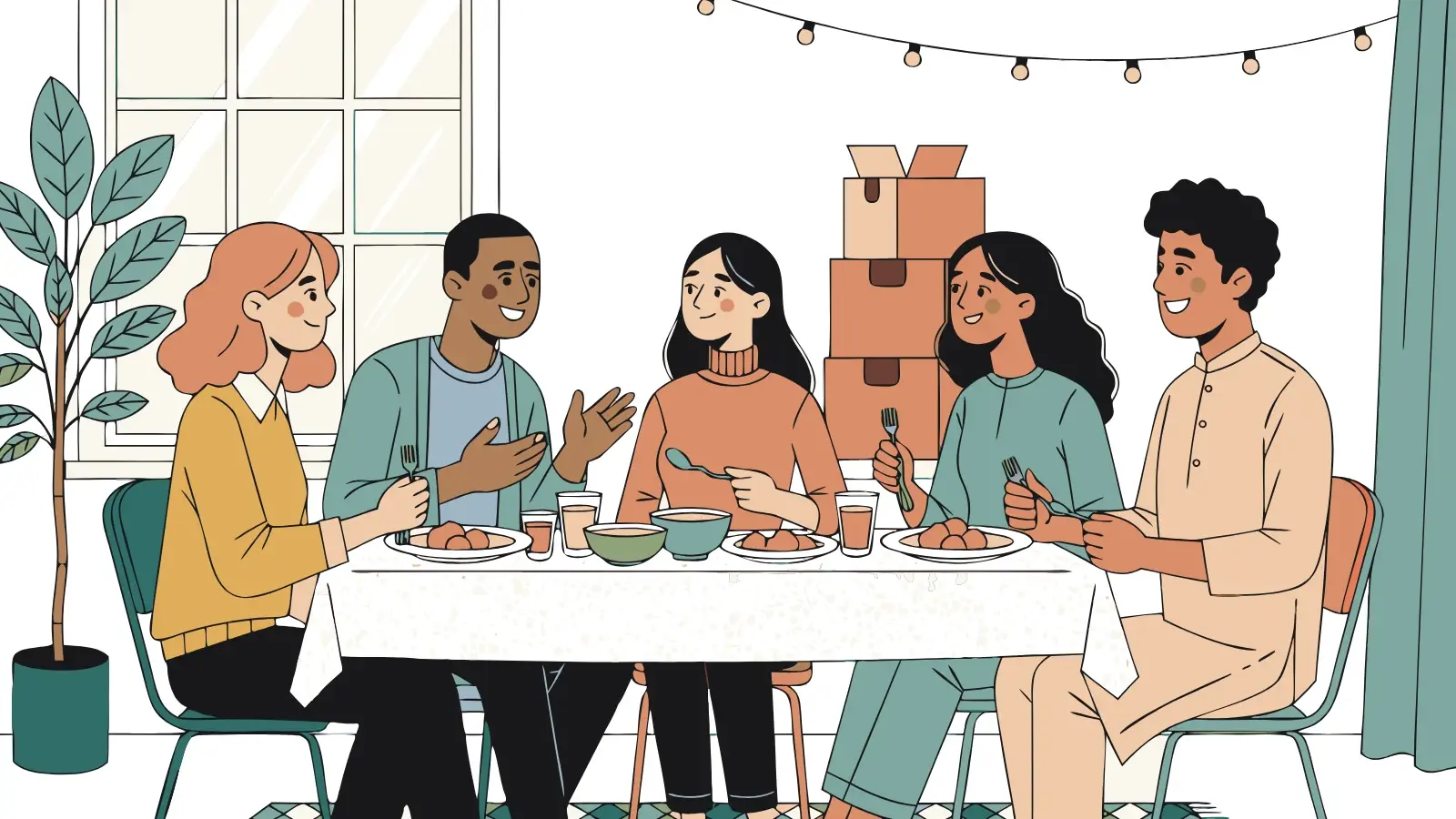
What do Indian students actually find hard about settling into Italy? Not the obvious things — most are well-prepared for the bureaucracy, the language, and the food. The harder layer is the texture of daily life: how long Permesso queues feel in the rain, what a 7 PM Italian dinner timing does to your familiar evening routine, how the absence of a casual after-work chai-and-samosa rhythm with colleagues changes your sense of belonging. Below are five composite stories — each anchored in a real Italian city, a real degree path, and a real cluster of arrival challenges that Indian students consistently mention. They are illustrations, not interviews.
Aarav, 23 — MSc Mechanical Engineering, Politecnico di Milano
Aarav arrived in Milan in late September for the autumn intake at Polimi. He had done the Universitaly pre-enrolment carefully, his apostilled documents were in order, his visa stamp had come through three weeks before flight. The first three weeks in Milan, by his own admission, were a mess he hadn't anticipated.
The Permesso di Soggiorno kit took two trips to the post office because the postal worker rejected his first attempt — one form field had been left blank. The Codice Fiscale was the temporary one from the Italian Consulate in Mumbai; he had to upgrade it at the Agenzia delle Entrate, which involved a 9 AM queue that started forming at 7 AM. The shared apartment he had booked from India turned out to be 45 minutes by metro from the Polimi campus he was actually attending — Milan has multiple Polimi locations, and he had assumed they were all centrally placed. The biggest surprise wasn't any single bureaucratic step. It was the cumulative pressure of every small administrative step requiring its own appointment, queue, document, and stamp.
The smaller surprises Aarav mentions: Italian shops close for lunch (12:30 PM to 3:00 PM) in a way Indian retail doesn't. Sunday is genuinely a closed day for most non-tourist Milan. The metro stops running at midnight on weekdays. The Italian dinner rhythm — 8 PM at earliest, 9 PM typical — disrupted his usual 7 PM dinner expectation for the first month. Three months in, he was used to all of it. By month six, he liked it.
Ishita, 24 — MSc International Management, University of Bologna
Ishita chose Bologna for its English-taught master's, its lower cost than Milan, and what she had read about its student-friendly walkability. The walkability part was true and turned out to matter more than she expected. Her first three months in Bologna unfolded faster than she had feared, with one specific challenge: housing.
She had applied for an ER.GO residence place but didn't qualify — her family's documented income placed her outside the ISEE ceiling. She arrived in early September with a 14-day Airbnb booking, planning to find a longer-term shared room from inside Italy. What she found is that the Bologna private rental market in September is brutal: every listing has 30+ applicants, landlords prefer Italian students or those with Italian co-signers, and rentals quoted at €450 turn out to need €500-550 plus utility deposits. She ended up paying €580 for a shared room she found through a Polimi-student friend's WhatsApp group, which was €100 above the band she had budgeted.
Once housing was settled, Ishita's Bologna experience was the smoothest of the five composite paths in this guide. The university's mense (canteens) were a daily cost saving she hadn't priced in — a hot meal for €4-€5. The Indian community in Bologna was smaller than in Milan but warmer; the local Indian student association had Friday-evening dinners that became her social anchor. Her one cultural friction: Italian classmates were friendly but the after-class "let's grab a coffee" rhythm assumed an Italian-language conversation she could only half-follow in month one. She used the free 30-day Italian course and committed to A2 by month three; by Christmas she was holding small-talk in Italian.
Rohan, 19 — English-taught Medicine and Surgery, University of Padua
Rohan finished Class 12 in May 2026 and sat the IMAT in September. He scored well enough to clear the cutoff at Padua, his first choice. By late October he was in Padua starting the 6-year English-taught Medicine and Surgery programme. His path is the longest of the five — six years rather than two — and his settling-in challenges had a different shape because of it.
The good news: Padua's English-taught medicine has a steady annual Indian intake, so the international student infrastructure was mature. Padua's housing market is tight but less brutal than Bologna's — he found a shared room for €420 within a week. The bad news: Italian-language daily life pressed on him faster than on Aarav (an MSc engineer who lived in central Milan with English-speaking flatmates) or Ishita (a master's student in a heavily international Bologna programme). Padua is a small Italian city, and once Rohan stepped off the international-student bubble, daily life — supermarket, pharmacy, post office, bank, doctor visits — was Italian-only.
Rohan's other adjustment was lifestyle. He had imagined a medical-student life similar to what cousins doing MBBS in India described — long classroom days, hostel friends, late-night study circles. Padua's Italian medical curriculum is more independent-study-driven than the Indian MBBS pattern. He had to build his own study rhythm in the first semester, which felt isolating. By the second semester he had a small group of Italian and Indian classmates studying together; by the end of year one, his rhythm felt normal.
Priya, 28 — MBA, POLIMI Graduate School of Management, Milan
Priya is older than the typical Italian masters student. She had worked for five years at a consumer-goods firm in Mumbai before applying to the full-time MBA at POLIMI Graduate School of Management. Her arrival challenges were different from those of the younger students in this guide — she arrived with savings, life skills, and the kind of confidence that comes with workplace experience. What surprised her was social.
The POLIMI GSoM full-time MBA cohort is small (roughly 80-100 students), highly international (more than 50% non-Italian), and largely in the 26-34 age band. Priya expected to slot into the cohort comfortably. What she didn't anticipate was that Italian classmates and European classmates socialised heavily around evening aperitivos — Italy's late-afternoon drinks-and-snacks ritual that runs from 6 PM to 8 PM. Priya, coming from a Mumbai office culture where work-night socialising was rare, had to consciously make space in her routine for what she initially viewed as "after-work hours that should be for studying."
Priya's practical surprise was banking. As an MBA student paying significant tuition, she needed to move €18,000-€20,000 over the course of her degree from India to Italy. RBI's Liberalised Remittance Scheme covered her annual transfers comfortably, but the operational steps — getting her parents' KYC documents in order for the bank wire, working with the SWIFT system for the inter-bank transfer, dealing with the 2-3 day processing delay — took longer than she had expected. She learned to plan tuition payments 10-14 days ahead of the deadline, not 3.
Karthik, 25 — MA Asian Studies, Università di Napoli L'Orientale
Karthik chose the least-common Italian path of the five. He is doing an MA in Asian Studies at Università di Napoli L'Orientale — one of the few Italian universities with serious South Asian studies (including Hindi, Sanskrit, and Indology programmes). His decision surprised his family, who had expected him to apply to UK universities. His settling-in challenges were unique because he chose Naples, which most Indian families don't.
Naples is Italy's third-largest city and has a complicated reputation. Karthik anticipated this and arrived with reasonable expectations. The first month in Naples for him was a study in scale and intensity — Naples is louder, hotter (autumn temperatures still in the high 20s), more chaotic, more crowded than the northern Italian cities his family had imagined as the Italian default. The Permesso filing was slower (5 weeks before the Questura summons, vs the 2-3 weeks Aarav waited in Milan). Public transport was reliable but less timetable-accurate than Milan or Bologna.
Where Karthik thrived was the cultural fit. Naples' food scene, market culture, neighbourhood densities, and louder social rhythm felt much closer to Mumbai or Chennai than to Milan or Trento. The Indian community in Naples is small (a few hundred students total), but Naples L'Orientale has Hindi and Sanskrit faculties, which meant the Indian-academic community he plugged into was intellectually serious. His monthly cost of living was the lowest of the five composites in this guide — €750-€850 all-in for a Naples shared room near campus, food, transport, and modest leisure.
Patterns across the five stories
The five composite stories above span very different cities (Milan, Bologna, Padua, Naples), very different degrees (MSc, MA, MBA, six-year Medicine), and very different student profiles (a 19-year-old Class 12 graduate vs a 28-year-old career-switcher). What's common across them is the shape of the adjustment curve.
- Weeks 1-3 are administrative-heavy. Permesso filing, ISEE Parificato, residency, SSN, bank account, SIM. Most settling-in stress concentrates here.
- Weeks 4-8 are social. The administrative pressure eases; the question of where you belong in your class, your flat, your city starts to matter. This is when the Italian-language gap is most felt — even by students in English-taught programmes.
- Months 3-6 are routine-building. By Christmas, the daily rhythm — the supermarket you prefer, the café you visit, the friends you study with — feels normal. The Italian-language daily comfort is around A2 by month 3, B1 by month 6 for students who study consistently.
- Months 6-12 are when Italy starts to feel like home. Almost every Indian student in our composite patterns describes the late-spring of their first year as the moment they stop feeling like they're "adjusting" and start feeling like they live there.
What surprised Indian students most, across patterns
- Italian dinner timing. 8 PM is the early end of dinner; 9 PM is normal. Indian families used to a 7 PM dinner often struggle the first few weeks before adjusting.
- The lunch closure. Most Italian small businesses (post office, banks, small shops, some pharmacies) close between 12:30 PM and 3:00 PM. Planning errands around this rhythm takes a few weeks.
- Sunday closures. Most retail, most banks, many cafés close Sunday. A common Indian-student mistake is leaving grocery shopping for Sunday morning.
- Italian queue culture. Italian queues are looser and less linear than Indian queues. "Whose turn is it?" is asked verbally; sometimes a numbered ticket is taken; sometimes there's no system at all. Expect the first month to feel friction-y at official offices.
- Italian social warmth without small-talk discipline. Italians are warm but not in the "How was your weekend? Where are you from? What do you do?" pattern Indian small-talk uses. Italian small-talk centres food, opinions, neighbourhoods, and sport. An Indian student waiting for the familiar small-talk script can feel adrift in the first few weeks.
- Pharmacies as a first-line medical resource. Italian pharmacists (farmacisti) are professionally trained and can diagnose and treat many common conditions without a doctor's visit. Indian students used to going straight to a doctor often miss this.
- Italian university canteens (mense). A subsidised hot meal for €4-€7 is available at most public university mense. Many Indian students don't discover this until month two and could have saved €100-€200 in the first month.
- Italian winter heating costs. December to February heating bills in the northern cities (Milan, Bologna, Turin, Padua, Trento) are €40-€100/month above the rest of the year. Plan a winter buffer.
- The Permesso ricevuta IS your legal status. Until the actual Permesso card arrives (2-4 months after Kit Giallo submission), the ricevuta is the document you carry — for travel, residency, bank account, etc. Photograph it; keep multiple copies.
- How long the actual Permesso card takes. Most Indian students assume the card arrives in 1-2 months. Realistic timing is 3-5 months from Kit Giallo submission. The ricevuta carries you through.
The small wins that make a difference
- Joining the Indian student association at your university. Every major Italian university with significant Indian intake (Polimi, UniBo, Sapienza, Padua, Polito, UniTo, Trento) has one. Find it in the first month.
- Finding the Sikh gurudwara or Hindu temple. Milan, Rome, Bologna, Turin, Florence all have at least one. The Saturday evening gatherings are a low-pressure way to meet other Indians in your city.
- Building a small group with Italian classmates by week 4. Studying together in Italian (even slowly) does more for Italian-language acquisition than any course.
- Walking your home neighbourhood end-to-end in the first week. You'll learn the supermarket, the closest pharmacy, the late-night kebab place, the metro stop, the bus stops. This 90-minute investment removes weeks of small confusions.
- Asking a senior Indian student (anyone in their second year) the practical questions before asking the international office. Senior students know which CAF is fastest, which bank opens accounts for students without long delays, which supermarket has the cheapest spices.
- Cooking Indian food at home from week one. Indian groceries are easily available in Milan, Rome, Bologna, Padua, and most major cities. Home-cooked meals are not just a cost saving — they're a daily anchor when everything else is unfamiliar.
What you'd tell a younger version of yourself
If we asked the five composites in this guide what they would tell a younger version of themselves, the patterns would converge.
- Start the Italian course in India, not after arrival. The 30-day ArrivoBuddy free course covers the first weeks. An IIC A1 course in Mumbai or Delhi adds another level.
- Plan the first three weeks slowly. Don't book trips, don't try to start gym memberships, don't sign long-term phone contracts — just settle.
- Carry every document in original AND in photocopy. Carry passport photos in your wallet for the first month — Italian offices ask for them regularly.
- Get the temporary Codice Fiscale at the Italian Consulate in India before flying. Free, ~1 week. Saves a day in Italy.
- Book accommodation that's walkable or one metro stop from your specific university campus, not the city centre.
- Open a bank account with N26 or Revolut digitally before you arrive; it gives you an IBAN before your traditional Italian-bank account is set up.
- If you're paying tuition from India, plan transfers 10-14 days ahead of the deadline.
- Build the small daily rhythms — the café, the supermarket, the study spot — before the social ones. Routine makes you feel at home faster than friends do.
A request to readers
We will replace this composite-illustration version of the guide with first-person interviews as we collect them. If you are an Indian student currently in Italy and want to contribute your real settling-in story — what surprised you, what helped, what you wish you'd known — write to stories@arrivobuddy.com. We don't pay (ArrivoBuddy is information-only and doesn't have a budget for storytelling fees), but we will quote you, link your LinkedIn if you want, and replace one of the composite illustrations above with your real story under your name. The honesty of this section depends on real Indian students sharing real experiences.
Sources we cite
- Polizia di Stato — Permesso di SoggiornoItalian state police — official residence permit procedure
- ER.GO — Emilia-Romagna regional student servicesBologna and the surrounding region scholarship body
- Indian Embassy Rome — emergency and welfareEmbassy of India in Rome — 24-hour contact for Indian nationals in Italy
- Italian Consulate Mumbai — Codice Fiscale and visa supportConsulate General of Italy in Mumbai
- Italian Embassy in New DelhiEmbassy of Italy in India
- Universitaly — official Italian university portalItalian Ministry of University and Research
- Italian Cultural Institute MumbaiIstituto Italiano di Cultura — pre-flight Italian-language preparation
Last reviewed against official sources on 18 May 2026. Verify fast-moving facts (visa fees, deadlines, FX rate) against the linked sources before relying on them for decisions.
Turn this into action
Reading is the easy part. These free tools turn what you just read into dates, numbers and documents you can actually work from.
This guide is information-only. Always verify the specific facts that affect your application against the official sources we link to (Italian Embassy in India, Universitaly, VFS Italy India, your university’s admission office).